Can an Ultrasonic Mist Maker Be Used with HOCl or Sodium Hypochlorite?
An ultrasonic mist maker can atomize some dilute HOCl and hypochlorite solutions, but a module built for clean water should not be treated as a chemical-handling component. The liquid concentration, wetted materials and test conditions need to be checked together.
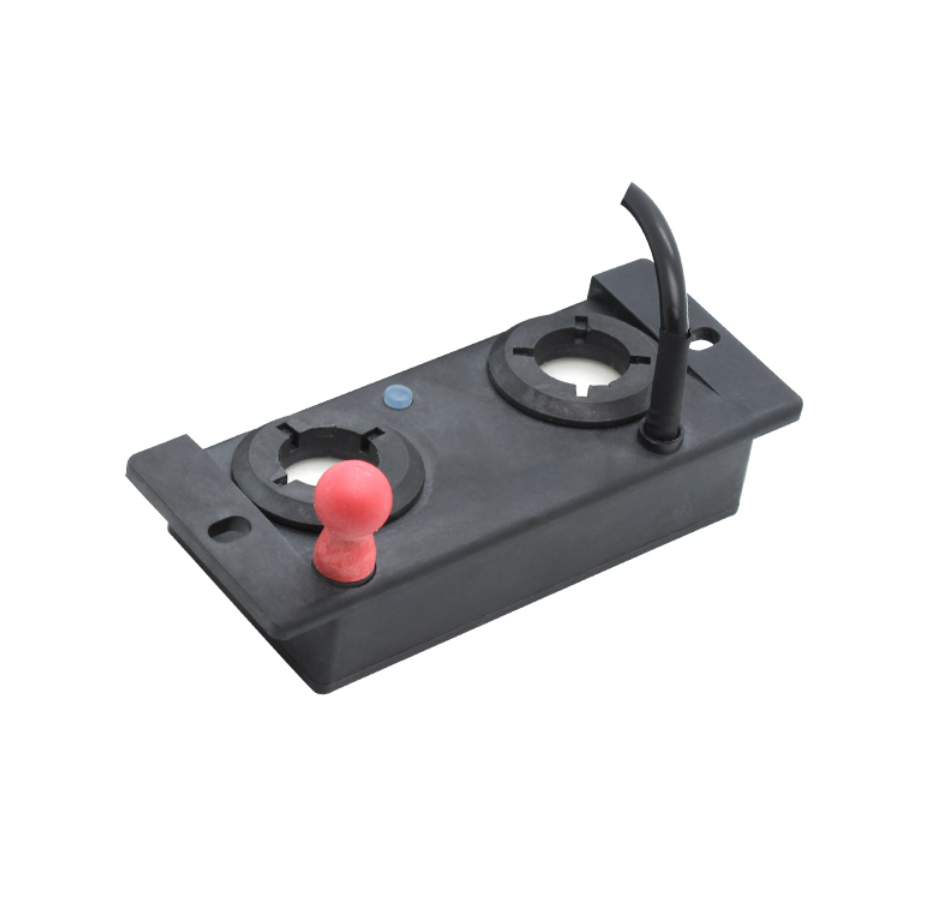
Short answer: for a corrosion-sensitive HOCl or sodium hypochlorite project, we normally start by evaluating a PPS module rather than a standard 304 stainless-steel mist maker. That is still a sample-test recommendation, not approval for every formulation.
Why the product name is not enough
Two bottles labelled “hypochlorous acid” may not create the same working environment. Available chlorine, pH, stabilizers, dissolved salts, storage age and operating temperature can all differ. Sodium hypochlorite solutions can also vary widely in concentration. A supplier cannot make a useful compatibility decision from the word “disinfectant” alone.
Before selecting a module, provide the exact product name or formulation, active concentration in ppm or percent, pH if known, liquid temperature and expected daily operating time. If the liquid is diluted on site, give both the concentrate and final working concentration.
Why PPS is the preferred starting point
PPS is an engineering polymer known for broad chemical resistance and low moisture absorption. In the PHIMAXX PPS models, the change is not limited to the outer housing: the retaining rings and water-level sensor are also PPS. This reduces the number of metal components exposed to the liquid.
For projects where corrosion resistance is the main concern, PPS is generally the stronger starting choice than 316 stainless steel. The MS-02P provides two heads for smaller sample and OEM systems; the MS-10P provides ten heads for higher output. Both use quartz-glass atomizing discs.
The MS-10S316 remains useful when a customer requires a metal construction, but 316 should not be assumed to provide the same resistance as PPS in oxidizing or chloride-containing liquids.
What the current PPS datasheets cover
The MS-02P and MS-10P datasheets list selected dilute aqueous disinfectants below 500 ppm, including hypochlorous acid, sodium hypochlorite, chlorine dioxide and quaternary ammonium compounds. The wording matters: it describes a range to evaluate, not universal compatibility.
A higher concentration, different additive package or elevated temperature needs separate review. For example, 3% hydrogen peroxide is roughly 30,000 ppm and is not covered by a statement referring to selected solutions below 500 ppm.
The whole wet side must be checked
The atomizer is only one part of an OEM system. Check the tank, seals, tubing, float, fasteners, adhesive or potting edges, cable entry and any pump that contacts the liquid. A PPS atomizer installed in an unsuitable metal tank does not make the complete system corrosion-resistant.
Also keep the matched DC power supply outside the liquid area and follow the module voltage requirements. Chemical compatibility and electrical matching are separate questions, and both have to be right.
A practical sample-test plan
- Use the final working formulation, not clean water and not an approximate substitute.
- Run at the expected liquid temperature, duty cycle, water depth and airflow.
- Record output at the start and at regular intervals.
- Inspect the housing, retaining rings, discs, sensor and cable entry for swelling, cracking, discoloration, deposits or corrosion.
- Clean the module using the planned maintenance method and check whether output recovers.
A short demonstration confirms that the module produces mist; it does not prove long-term compatibility. The test duration should reflect the actual risk and service interval expected by the OEM.
Information to send with your inquiry
Send the liquid name, active concentration, pH, temperature, target output, operating hours per day, tank drawing or dimensions, expected quantity and destination country. Photos of the existing tank or failed atomizer are also useful. With those details, we can suggest whether to begin with MS-02P or MS-10P and quote the matched power supply.
Need an atomizer for an HOCl or hypochlorite project?
Send the working concentration and equipment details. PHIMAXX will check the appropriate PPS sample direction without assuming that every disinfectant formula is the same.
Send your liquid details Email PHIMAXX