Ultrasonic Mist Makers for Salt Water and Saline Solutions
Salt water is one of the hardest applications for a conventional ultrasonic mist maker. Chloride exposure, salt deposits and continuous wet operation can damage metal parts and reduce output, even when the housing is described as stainless steel.
Short answer: do not select a salt-water fogger only because it says “304” or “316 stainless steel.” For corrosion resistance, PPS is normally the preferred PHIMAXX option to evaluate. Salt concentration, temperature, deposits and every wetted component still need to be tested.
Why salt water causes two different problems
The first problem is corrosion. Chloride-containing liquids can cause localized attack on stainless steel, especially around gaps, deposits and areas that remain wet. Moving from 304 to 316 improves resistance, but it does not make the module immune.
The second problem is crystallization and scale. As mist is produced, dissolved material remains in the tank and can become more concentrated. Salt can collect on the atomizing discs, sensor and surrounding surfaces. Output may drop even when the housing itself has not visibly corroded.
PPS or 316 for a saline atomizer?
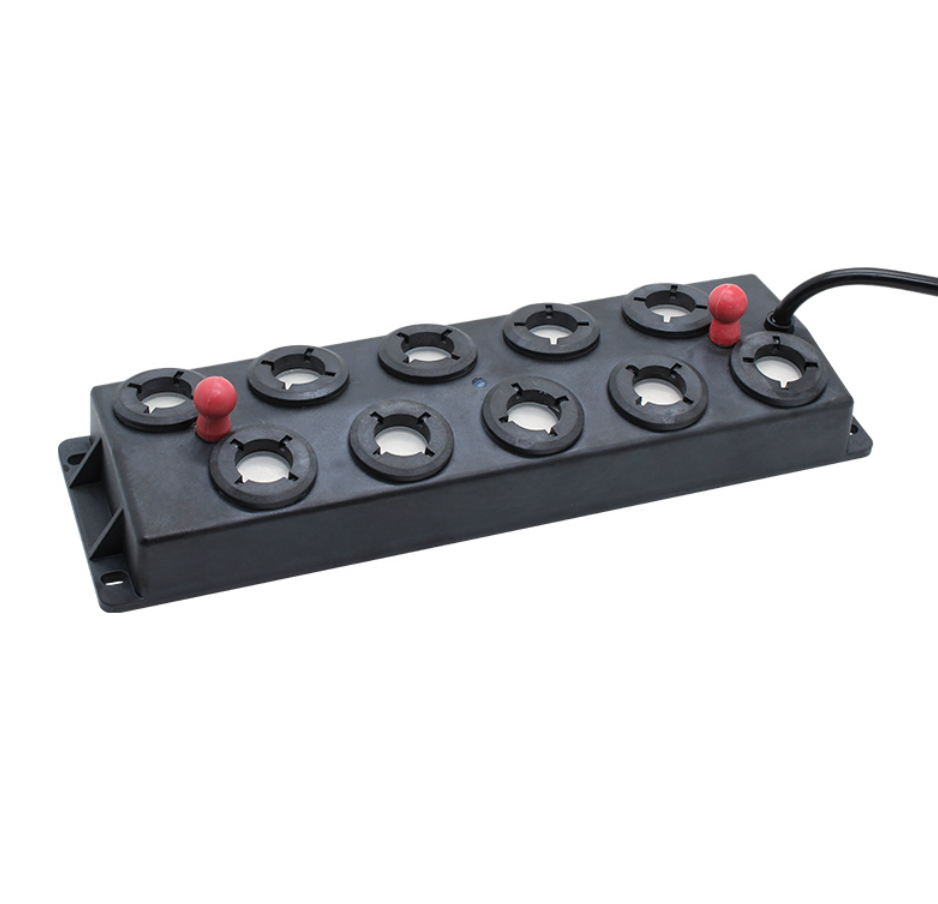
When corrosion resistance is the main selection factor, the PPS MS-02P and MS-10P are normally the first models to consider. Their housing, retaining rings and water-level sensor are PPS, and they use quartz-glass atomizing discs.
The MS-10S316 uses a polished 316 stainless steel housing and retaining rings. It may suit a project that specifically requires metal construction or a particular mechanical arrangement, but it should not be presented as equal to PPS for every saline or chloride environment.
Neither material choice eliminates the need for testing. The salt type, concentration and contaminants matter, and so do the other parts of the equipment.
Salt spray chambers need special attention
A laboratory salt spray or corrosion-test chamber is not the same as a water humidifier. The test standard, required droplet collection rate, aerosol distribution and chamber control method determine whether an ultrasonic module is appropriate. PHIMAXX supplies an atomization component; the chamber manufacturer remains responsible for validating the complete test method.
If the module is being evaluated for a salt spray chamber, share the applicable test standard, solution concentration, chamber volume, required operating time and existing fog-delivery arrangement. This prevents a mist-output discussion from being mistaken for confirmation that the complete chamber meets a standard.
Design the tank for cleaning and concentration control
Make the module removable. Avoid hidden pockets where concentrated salt can remain after draining. Keep the correct liquid depth over the atomizer and make sure the refill method does not allow the concentration to drift unnoticed.
Plan a cleaning interval based on observation during the sample test. Clean-water service-life figures should not be copied directly to saline duty. Atomizing discs are consumable parts, and a spare-disc plan is sensible for continuous equipment.
What to record during a saline test
- Exact salt or saline formulation and concentration.
- Initial and final mist output under the same water depth and voltage.
- Liquid temperature and total operating hours.
- Deposit formation on discs and the water-level sensor.
- Condition of the housing, retaining rings, cable entry and all tank components.
- Output recovery after the planned cleaning procedure.
Use the same formulation and maintenance method intended for production. An open-bucket test with tap water does not answer the corrosion or deposit question.
What we need to recommend a sample
Send the solution composition and concentration, target output, chamber or tank size, working hours, liquid temperature, required construction material, expected quantity and delivery country. If an earlier module failed, include photos and the approximate time to failure.
Evaluating an ultrasonic atomizer for saline?
Send the working concentration and equipment details. We can suggest a PPS or 316 sample direction and the matching power supply for your OEM test.
Discuss your saline project Email PHIMAXX